


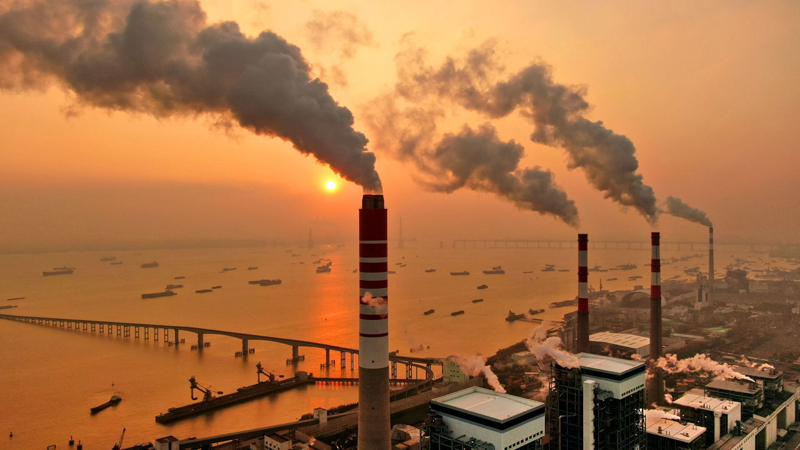
In the initial phase of the carbon market pilot, it is proposed that businesses in three sectors will participate: thermal power, iron and steel, and cement. In this pilot phase, it is expected that about 200 businesses will be included in the market…
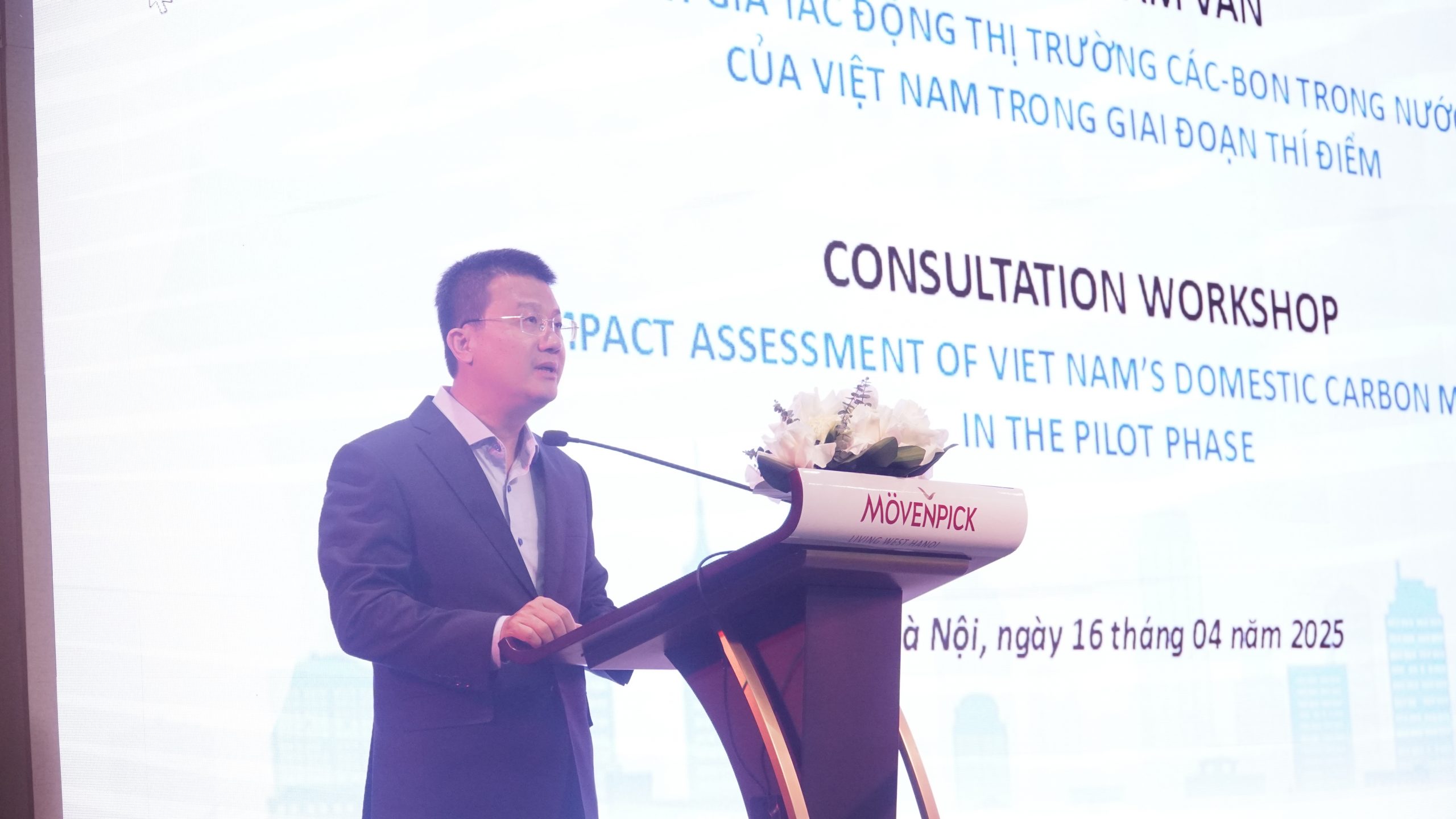
In order to provide a scientific basis for the process of developing and selecting a model for designing and managing Vietnam’s carbon market (ETS), on April 16, 2025, the Southeast Asia Energy Transition Partnership (ETP) in collaboration with the Department of Climate Change, Ministry of Agriculture and Environment organized a Consultation Workshop on “Assessing the impact of Vietnam’s domestic carbon market in the pilot phase”. This is the Technical Assistance “Assessing the impact of the greenhouse gas emission quota and carbon credit trading system in Vietnam” funded by the United Nations Office for Project Services (UNOPS) under the ETP Program, to support the Department of Climate Change in developing the carbon market in Vietnam. The program aims to analyze in depth and model the impact of carbon credit and greenhouse gas emission quota management options, providing input for the development of a national legal framework to operate the carbon market in Vietnam.
PREPARING THE BASIS FOR THE PILOT OPERATION OF THE CARBON MARKET
According to Mr. Nguyen Tuan Quang, Deputy Director of the Department of Climate Change, Ministry of Agriculture and Environment, in order to achieve the goal of responding to global climate change, carbon pricing tools, especially the greenhouse gas emission trading system (ETS) – also known as the compliant carbon market – are one of the important and effective solutions, chosen by many countries, including Vietnam.
Vietnam has issued a legal framework for the operation of the carbon market. Mr. Quang informed: Article 139 of the Law on Environmental Protection 2020 stipulates the “organization and development of the carbon market”. On that basis, the Government has issued Decree No. 06/2022/ND-CP regulating the reduction of greenhouse gas emissions and the protection of the ozone layer and is considering issuing Decree 06 amending and supplementing it.
Accordingly, there have been detailed regulations on the organization and development of the carbon market, setting out a specific roadmap for the development of the carbon market with a pilot phase from now until the end of 2028 and official operation from 2029.
The Prime Minister’s decisions on the list of facilities required to conduct greenhouse gas inventories have been issued. In particular, the Project on the establishment and development of the carbon market in Vietnam has specified key tasks and solutions to put the carbon market into operation according to the set roadmap. The Project aims to pilot the Vietnam Carbon Trading Platform in 2025.
Therefore, the Technical Support aims to analyze, build models and assess the impacts of different design and management options for the carbon market, thereby making recommendations for the Department of Climate Change to consider in the process of developing and perfecting legal regulations and preparing necessary conditions for the effective operation of the market in the upcoming pilot phase.
The Deputy Director of the Department of Climate Change emphasized the issues that need to be focused on so that the recommendations in the report are well-reasoned and feasible.
First, regarding market design options: the suitability and feasibility of scenarios on the scope of participating sectors, how to determine the total emission quota (ceiling) and especially the method of allocating the initial quota (such as free allocation, auction or combined with what rate) to the facilities in the pilot phase, based on the impact analysis that has been conducted.
Regarding the carbon market scope, the Ministry has submitted to the Prime Minister a proposal for enterprises in 3 fields to participate in the pilot carbon market, which are: thermal power, iron and steel, and cement.
It is expected that in the next phase, enterprises in other fields will be expanded. So in the coming years, which subjects should be expanded to develop the carbon market?
According to the representative of the Carbon Market Department, in the pilot phase, the market will focus on 3 fields: iron and steel production, cement, thermal power. In this phase, only large facilities will be included in the carbon market with an expected participation of about 200 enterprises.
Second, regarding socio-economic impacts: Do the assessment results on the impact on production costs, competitiveness, technological innovation, employment, etc. of different ETS options for enterprises participating in the pilot such as: Thermal power, steel, cement accurately reflect the reality and concerns of enterprises?
For the carbon market to operate effectively, the prerequisite is that enterprises (iron and steel, thermal power, cement) must ensure the production situation. The impact on the production and business activities of enterprises is very important. Therefore, the proposed ETS options must ensure the production activities of enterprises.
Third, Mr. Quang also raised the issue of using carbon credits for offset. Accordingly, it is necessary to raise the issue of how the regulations on the use of carbon credits generated from domestic projects to offset emissions in the pilot ETS system should be designed? Currently, the revised Decree 06 has proposed this rate to be 30%, the Department of Climate Change informed.
Fourth, to ensure the operation of the carbon market, the ETS system needs infrastructure and capacity such as a national registry, a trading platform, a MRV (measurement, reporting, verification) system, and what technical support and capacity building are most urgent to ensure that businesses and management agencies are ready to participate in operating the pilot market effectively.
Fifth, regarding market management, based on international experience and impact analysis, what mechanisms (such as market stabilization reserves, floor/ceiling price regulations, etc.) need to be considered to manage price fluctuations and ensure liquidity, transparency and stability for the carbon market in the early stages of operation.
ASSESSING THE IMPACT OF PILOT ETS MANAGEMENT OPTIONS
To effectively operate the pilot carbon market, experts believe that it is necessary to consider market design and management options, assess the impact of each option, and select the optimal option, ensuring harmony between economic development needs and greenhouse gas emission reduction goals.
Mr. John Robert Cotton, Deputy Director of the Southeast Asia Energy Transition Partnership (ETP) Program, said that assessing the impact of the carbon market will be an important foundation for creating a domestic ETS exchange market system. This will contribute to Vietnam achieving its goal of net zero emissions by 2050. The impact assessment will provide parameters, metrics, and measurement tools, from which Vietnam can implement a pilot market operation phase from 2025-2028, and then officially deploy it.
Analyzing the national context and proposing a carbon market management plan, Ms. Nguyen Hong Loan, Director of GreenCIC Company, said that there are 10 steps to design and operate a carbon market, with 3 design contents including: scope, quota setting, and quota allocation.

To analyze and select industries/sectors participating in the ETS, it is necessary to ensure the harmony of greenhouse gas emission reduction benefits with economic benefits. Therefore, the overall approach to determining the scope is based on two main factors: emission intensity and trade intensity. The scope of Vietnam’s ETS pilot sector selection is enterprises in the thermal power, steel and cement industries. According to GreenCIC’s analysis, thermal power with high emission intensity and low trade intensity will be included in the ETS pilot phase. Steel and cement with high emission intensity and high trade intensity will be included in the ETS according to the roadmap. However, including these industries in the early phase of the ETS will help minimize negative impacts in the event that Vietnam’s trading partners have applied carbon prices as well as the CBAM mechanism to these industries.

Allocating quotas during the ETS pilot phase under the unconditional NDC scenario to facilitate businesses to become familiar with regulations and activities in the carbon market, reducing negative impacts on production, business and the economy.
Ms. Loan proposed allocating quotas during the ETS pilot phase under the unconditional NDC scenario to facilitate businesses to become familiar with regulations and activities in the carbon market, reducing negative impacts on production, business and the economy.
The expert also emphasized the importance of establishing a total quota (limit). Determining a total quota is essential to ensure that the implementation of the ETS effectively contributes to achieving Vietnam’s greenhouse gas emission reduction target. Therefore, it is necessary to have clear regulations along with transparent formulas and data sources…
Regarding the impact assessment of ETS management options in the pilot phase, the research team said that it focused on the impacts on 114 enterprises, including 56 clinker production facilities in the cement sector, 27 crude steel production facilities and 31 thermal power facilities, with total greenhouse gas emissions accounting for nearly 43% of national greenhouse gas emissions in the period 2020-2022.
The impact assessment shows that the application of ETS significantly reduces the total costs of enterprises to achieve the targets under the NDC in all scenarios. The thermal power industry reduces the most compliance costs, followed by iron and steel. The cement industry, with the advantage of having lower investment costs to reduce greenhouse gas emissions than the other two industries, can benefit from the supply of quotas to the market. In general, investment costs in all three sectors are relatively low, ranging from 0.02% to less than 2% of the sector’s total investment.
Dr. Ho Cong Hoa, Academy of Policy and Development shared that the implementation of measures aimed at reducing greenhouse gas emissions according to the NDC all have the impact of reducing the economy’s GDP. However, the scale of impact is relatively small, only from 0.00075% to 0.0208% of GDP, in which the scenario of achieving unconditional NDC with a maximum offset credit usage rate of 20% has the lowest impact on the economy, including the impact on consumer prices.
In addition, the implementation of the ETS will promote the restructuring of large emission sectors, while creating development opportunities for low emission sectors and green technology…